PART 1: QUALITY OF LIFE AND ITS COMPONENTS
🔵 Definition of Quality of Life
Quality of Life refers to the state of fulfillment of various needs of human beings. It is not just about achieving physical comfort, peace, and facilities, but also includes fulfillment of fundamental needs along with psychological, socio-cultural, and spiritual needs.
Definition: Quality of Life is the state of satisfaction and happiness that a person experiences when their physical, mental, social, cultural, and spiritual needs are fulfilled.
🔵 Components of Quality of Life
| Component | Description |
|---|---|
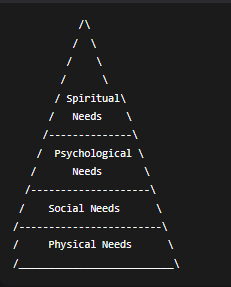
| Physical Needs | Nutritious food, proper housing, clean drinking water |
| Social Needs | Education, skills, health services, employment opportunities, communication |
| Psychological Needs | Mental peace, self-respect, social security, religious values |
| Spiritual Needs | Inner satisfaction, self-actualization, moral values |
🟢 Diagram: Pyramid of Quality of Life Components
PART 2: NEED AND IMPORTANCE OF QUALITY OF LIFE
🔵 Why Quality of Life is Important?
- Fulfillment of Basic Needs
- Proper arrangement of food, clothing, and shelter
- Balanced and nutritious diet
- Clean and hygienic living environment
- Attainment of Quality Education
- Access to education according to one's capability
- Helps in economic progress
- Contributes to family development
- Health Services and Sanitation
- Access to necessary health services
- Clean environment at home and community
- Fresh air, light, and ventilation
- Maternal and Child Welfare
- Care from pregnancy to 5 years of age
- Health services for pregnant women
- Reduces maternal and child mortality
- Income Generation and Employment
- Opportunities for good health, education, and training
- Self-employment possibilities
- Participation in economic activities
- Social Equality
- No discrimination between sons and daughters
- Women's participation in all activities
- Development of confidence and capability
PART 3: ELEMENTS OF QUALITY OF LIFE
🟢 Major Elements of Quality of Life
1. Nutritious Food
- Essential for physical, mental, and emotional development
- Deficiency leads to malnutrition and diseases
- Regular consumption of balanced diet necessary
2. Family Size
- Small family size enables better resource management
- Large families face economic burden
- Affects education, health, and overall quality of life
3. Health
- Foundation of national development
- Requires quality health services and facilities
- Includes: nutritious diet, clean water, personal hygiene, regular checkups
4. Sanitation
- Clean house, surroundings, toilets, drainage
- Creates healthy environment
- Enables active participation in development
5. Education
- Most important tool for development
- Enables employment and income generation
- Helps fulfill all needs effectively
6. Income and Employment
- Directly affects quality of life
- More earning members = better economic condition
- Skills training for women and men
7. Safety Security
- Creates fear-free environment
- Increases efficiency and productivity
- Protection from crimes, violence, accidents
8. Saving
- Regular saving from income
- Provides financial security
- Enables investment for better returns
9. Housing
- Protection from weather, wild animals
- Proper space for all family members
- Good ventilation and light
10. Social and Cultural Values
- Positive values enhance quality of life
- Negative practices (discrimination, superstitions) reduce quality
- Equal treatment of children essential
11. Proper Spiritual Development
- Mental peace and satisfaction
- Helps control negative behaviors
- Essential for complete development
PART 4: BASES OF QUALITY LIFE
🔵 Major Bases of Quality of Life
1. Basic Needs
- Food, clothing, shelter
- Education
- Health and sanitation
- Safety
- Proper nutrition
Abraham Maslow's Hierarchy of Needs (1943) forms the foundation for understanding basic needs fulfillment.
2. Physical Quality of Life Index (PQLI)
Measures health and educational status through:
- Infant mortality rate
- Life expectancy
- Literacy rate
3. Human Development Index (HDI)
Introduced by UNDP in 1990, measures:
- Per capita income
- Education
- Health/Life expectancy
PART 5: INDICATORS OF QUALITY LIFE
🟢 Major Indicators
1. Small Family
- Easier fulfillment of needs
- Better resource allocation
- All members' needs satisfied
2. Quality Education
- Removes ignorance
- Better employment opportunities
- Mutual respect and cooperation
3. Marriage at Appropriate Age
- Proper physical and mental development
- Better family planning
- Quality care for children
4. First Pregnancy at Right Age
- Minimum 20 years age
- Education and employment opportunities utilized
- Healthy mother and child
5. Child Spacing
- 3-5 years gap between children
- Better health for mother and children
- More attention to each child
6. Health and Sanitation
- Nutritious food
- Health services
- Personal and environmental hygiene
7. Nutritious Food
- Physical and mental development
- Disease resistance
- Better performance
8. Emotional Balance
- Loving relationships
- No discrimination
- Positive family environment
9. Responsible Parenthood
- Proper care of children
- Quality education
- Independent capability development
10. Saving Habit
- Regular saving
- Investment for income
- Solution of economic problems
PART 6: HUMAN DEVELOPMENT INDEX (HDI)
🔵 Definition and Concept
HDI is a composite index measuring average achievement in key dimensions of human development.
Definition: Human Development Index is a statistical tool used to measure a country's overall achievement in its social and economic dimensions.
🔵 Components of HDI
- Long and Healthy Life - Measured by life expectancy
- Education - Measured by literacy rate and enrollment
- Decent Standard of Living - Measured by GNI per capita
🔵 HDI Calculation Categories
| HDI Value | Category |
|---|---|
| 0.000 - 0.549 | Low Human Development |
| 0.550 - 0.699 | Medium Human Development |
| 0.700 - 0.799 | High Human Development |
| 0.800 - 1.000 | Very High Human Development |
📊 Table: HDI of Selected Countries (2014 UNDP Report)
| Rank | Country | HDI Value |
|---|---|---|
| 1 | Norway | 0.944 |
| 2 | Australia | 0.935 |
| 3 | Switzerland | 0.930 |
| 4 | Netherlands | 0.922 |
| 5 | USA | 0.914 |
| 13 | Germany | 0.916 |
| 145 | Nepal | 0.540 |
| 187 | Niger | 0.337 |
📊 Nepal's HDI Progress
| Year | Rank | HDI Value |
|---|---|---|
| 2005 | 142 | 0.509 |
| 2010 | 138 | 0.528 |
| 2012 | 157 | 0.463 |
| 2014 | 145 | 0.540 |
🔴 Summary Points
- Quality of Life means fulfillment of all types of human needs - physical, mental, social, cultural, and spiritual.
- Main components include nutritious food, proper family size, health, sanitation, education, income, safety, saving, housing, cultural values, and spiritual development.
- Quality of Life is important for fulfillment of basic needs, quality education, health services, maternal-child welfare, employment, and social equality.
- Bases of Quality of Life include basic needs fulfillment, PQLI, and HDI.
- Indicators of good quality life: small family, quality education, appropriate marriage age, proper child spacing, health, nutrition, emotional balance, responsible parenthood, and saving habits.
- HDI measures human development through life expectancy, education, and per capita income.
🔑 Key Definitions
| Term | Definition |
|---|---|
| Quality of Life | The state of fulfillment of physical, mental, social, cultural, and spiritual needs of human beings |
| Family Life Education | Education that helps in making family life successful and happy |
| Basic Needs | Fundamental requirements like food, clothing, shelter necessary for survival |
| HDI | Human Development Index - measure of achievement in health, education, and income |
| PQLI | Physical Quality of Life Index - measures infant mortality, life expectancy, and literacy |
| Sanitation | Maintaining cleanliness of surroundings for healthy living |
| Maternal Health | Health of women during pregnancy, childbirth, and postpartum period |
| Child Spacing | Gap between two children, ideally 3-5 years |
| Responsible Parenthood | Parents' duty to properly raise children with love, education, and care |
| Spiritual Development | Inner growth leading to mental peace and satisfaction |
🎯 Learning Objectives
- After studying this chapter, students will be able to:
- Define quality of life and explain its components
- Understand the need and importance of quality of life
- Identify the elements and indicators of quality life
- Explain the bases of quality life including basic needs, PQLI, and HDI
- Analyze Nepal's HDI status and suggest improvements
- Apply concepts of quality life in family and community contexts
💡 Exam Tips
- For definitions: Memorize key terms exactly as given in textbook
- For components: Use mnemonic to remember (F-Food, H-Health, E-Education, I-Income, S-Saving, H-Housing, S-Spiritual)
- For diagrams: Practice drawing the pyramid and component tables
- For HDI: Remember Nepal's rank (145 in 2014) and value (0.540)
- For long answers:
- Introduction (definition)
- Main body (components, importance, indicators)
- Conclusion (summary and relevance)
- For numerical questions: Practice HDI calculation formula if required
📚 Important Statistical Data
- Nepal's HDI 2014: 0.540 (Rank 145)
- Top HDI Country 2014: Norway (0.944)
- Infant Mortality Rate: One of PQLI indicators
- Literacy Rate: Educational indicator
- Life Expectancy: Health indicator