PART 1: INTRODUCTION TO DISEASES
🔵 Definition of Disease
Disease refers to a condition where the body or its parts do not function properly. It is derived from two words: "Dis" (lack of) and "Ease" (comfort), meaning lack of comfort or easiness.
Definition: Disease is a particular abnormal condition that negatively affects the structure or function of all or part of an organism, and that is not due to any immediate external injury.
Webster's Dictionary: "Disease is the distinctive process in a particular organ or organism. It is the bad condition of the body."
PART 2: TYPES OF DISEASES
🟢 Classification of Diseases
Diseases are classified into two main categories based on their ability to spread:
1. Communicable Diseases (Infectious Diseases)
- Diseases that can spread from one person to another
- Caused by pathogens (bacteria, viruses, fungi, parasites)
- Transmitted through various modes
Examples: Cholera, Typhoid, Common Cold, Tuberculosis, COVID-19
2. Non-communicable Diseases (Non-infectious Diseases)
- Diseases that cannot spread from one person to another
- Caused by genetic factors, lifestyle, environment
- Develop over time
Examples: Cancer, Asthma, Heart Disease, Diabetes, High Blood Pressure
📊 Comparison Table: Communicable vs Non-communicable Diseases
| Feature | Communicable Diseases | Non-communicable Diseases |
|---|---|---|
| Cause | Pathogens (bacteria, viruses) | Genetic factors, lifestyle, environment |
| Transmission | Direct/indirect contact | Cannot be transmitted |
| Onset | Usually sudden | Gradual development |
| Duration | Often short-term | Usually long-term/chronic |
| Curability | Often curable | Rarely completely curable |
| Examples | Cold, Cholera, TB | Cancer, Diabetes, Heart disease |
PART 3: CYCLE OF COMMUNICABLE DISEASE
🔵 Disease Transmission Cycle
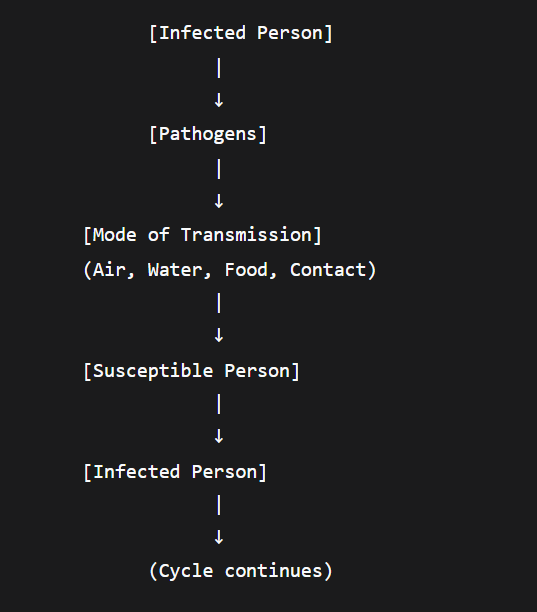
Explanation:
- Source/Reservoir: Infected person or carrier
- Pathogens: Disease-causing microorganisms
- Mode of Transmission: How the disease spreads
- Susceptible Host: Healthy person who can get infected
- New Infection: Disease develops in new host
PART 4: MODES OF DISEASE TRANSMISSION
📋 Table: Disease Transmission Modes
| S.N. | Mode of Transmission | Method | Examples |
|---|---|---|---|
| 1 | Direct Contact | Touching, living together, using infected items | Scabies, Skin infections |
| 2 | Airborne | Breathing contaminated air, coughing, sneezing | Common Cold, TB, Flu |
| 3 | Food & Waterborne | Contaminated food/water, unclean hands | Cholera, Typhoid, Diarrhea |
| 4 | Vector-borne | Mosquito, insect bites | Malaria, Dengue, Japanese Encephalitis |
| 5 | Animal-borne | Animal bites, contact with infected animals | Rabies, Plague |
| 6 | Sexual Contact | Unprotected sexual intercourse | HIV/AIDS, Syphilis |
| 7 | Blood-borne | Contaminated needles, blood transfusion | Hepatitis B, C, HIV |
| 8 | Mother to Child | During pregnancy, birth, breastfeeding | HIV, Hepatitis B |
PART 5: FOOD AND WATERBORNE DISEASES
1. Roundworm (Ascariasis)
Cause: Intestinal worm Ascaris lumbricoides
Characteristics:
- Length: 20-30 cm
- Life cycle: About 2 months
- One female produces 200,000+ eggs daily
Symptoms:
- Abdominal pain, stomach ache
- Loss of appetite
- Nausea and vomiting
- Diarrhea
- Worms visible in stool
- Malnutrition in children
Transmission: Through contaminated food, water, or soil containing worm eggs
2. Diarrhea
Definition: Passing loose, watery stools three or more times a day
Cause: Bacterial, viral, or parasitic infections
Symptoms:
- Frequent loose, watery stools
- Dehydration
- Loss of body fluids
- Undigested food in stool
- Nausea and vomiting
- Abdominal cramps
- Weakness
Severe Dehydration Symptoms:
- Sunken eyes
- Dry mouth and skin
- Decreased urination
- Weak pulse
- In infants - sunken fontanelle
3. Dysentery
Definition: Inflammation of the intestines causing diarrhea with blood and mucus
Types:
a) Amoebic Dysentery
Cause: Entamoeba histolytica (protozoa)
Symptoms:
- Abdominal pain
- Intermittent diarrhea
- Blood and mucus in stool
- Weakness
- Loss of appetite
- Dehydration symptoms
b) Bacillary Dysentery
Cause: Shigella bacteria
Symptoms:
- Acute diarrhea
- Abdominal pain
- Frequent but small amounts of stool
- Bloody diarrhea
- Fever and discomfort
- Dehydration
🟢 Causes of Food and Waterborne Diseases
- Open defecation
- Dirty surroundings and poor sanitation
- Contaminated water sources
- Poor personal hygiene
- Drinking water from any source
- Food kept uncovered
- Eating raw/improperly washed fruits/vegetables
- Not washing hands after toilet/field work
- Eating without washing hands
- Drinking unpurified water
🟢 Prevention of Food and Waterborne Diseases
- Always use clean toilets
- Proper disposal of garbage and waste
- Keep water sources clean
- Avoid open defecation
- Use clean toilets
- Maintain personal hygiene
- Drink only purified water (boiled, filtered, chlorinated)
- Keep food covered
- Wash hands thoroughly after toilet/field work
- Wash hands before eating
- Wash fruits/vegetables properly before eating
- Drink only clean/purified water
PART 6: AIRBORNE DISEASES
1. Common Cold
Cause: Various viruses, mainly Rhinovirus
Characteristics:
- Most common infectious disease
- Affects all age groups
- Seasonal occurrence
Symptoms:
- Runny/stuffy nose
- Sore throat
- Sneezing
- Cough
- Mild fever
- Watery eyes
- Fatigue
- Headache
Transmission: Through airborne droplets from coughing/sneezing
PART 7: DISEASES TRANSMITTED BY CONTAMINATED NEEDLES
1. Hepatitis B
Definition: Liver disease caused by Hepatitis B virus (HBV)
Note: Called "Silent Killer" because many people don't know they're infected until liver damage occurs. About 20 million people die annually from Hepatitis B-related causes.
Transmission Modes:
- Infected blood transfusion
- Unsterilized needles/syringes
- Unsterilized surgical/dental equipment
- Shared razors, toothbrushes
- Sexual contact with infected person
- Mosquito bites (from infected person)
- Infected pregnant mother to child
- Tattooing with unsterilized equipment
Symptoms:
- Fatigue
- Abdominal pain
- Dark urine
- Loss of appetite
- Yellow eyes/skin (jaundice)
- Liver damage
- Can lead to liver cancer/cirrhosis
Prevention and Control:
- Maintain personal hygiene
- Use only sterilized needles/syringes
- Avoid drug abuse
- Use personal razors, toothbrushes only
- Dispose used needles properly
- Use sterilized equipment for piercing/tattoo
- Vaccinate infants at birth
- Vaccinate all children
- Practice safe sex
2. Hepatitis C
Definition: Liver disease caused by Hepatitis C virus (HCV)
Cause: Similar to Hepatitis B, transmitted through infected blood and contaminated needles
Symptoms: Similar to Hepatitis B
Note: Hepatitis B and C are NOT transmitted by:
- Casual contact
- Living together
- Sharing food
- Hugging/kissing
- Using common utensils
PART 8: NON-COMMUNICABLE DISEASES
🔵 Definition
Non-communicable diseases are diseases that cannot be transmitted from one person to another. They develop due to genetic factors, lifestyle choices, and environmental conditions.
Definition: Non-communicable diseases (NCDs) are medical conditions or diseases that are not infectious and cannot be passed from person to person.
🟢 Causes of Non-communicable Diseases
| Controllable Factors | Uncontrollable Factors |
|---|---|
| Tobacco use | Genetic factors |
| Alcohol consumption | Age |
| Physical inactivity | Gender |
| High stress | Family history |
| Unhealthy diet | |
| Obesity |
📊 Comparison: Communicable vs Non-communicable
| Aspect | Communicable | Non-communicable |
|---|---|---|
| Cause | Pathogens | Lifestyle, genetics, environment |
| Transmission | Can spread | Cannot spread |
| Onset | Rapid | Slow/gradual |
| Duration | Usually short | Long-term/chronic |
| Curability | Often curable | Usually managed, not cured |
| Example | Cold, Cholera | Cancer, Diabetes |
PART 9: MAJOR NON-COMMUNICABLE DISEASES
1. Cancer
Definition: Abnormal and uncontrolled growth of cells in any part of the body
Note: Over 100 types of cancer identified. 20% of cancer deaths are due to tobacco use. 80% of cancer deaths occur in developing countries. Currently about 56 lakh people die annually from cancer worldwide. Expected to reach 1 crore 14 lakh by 2030.
Causes of Cancer:
Physical factors: UV radiation, radiation exposure
Chemical factors: Tobacco, alcohol, pollution
Biological factors: Viruses, infections
Hepatitis B - liver cancer
Helicobacter Pylori - stomach cancer
Common Cancers:
- Lung cancer (tobacco-related)
- Breast cancer (women)
- Cervical cancer (women)
- Prostate cancer (men)
- Skin cancer
- Oral cancer
Symptoms of Cancer:
- Non-healing sores/ulcers
- Unusual bleeding/discharge
- Lump/thickening in breast/body
- Changes in mole/wart
- Changes in bladder/bowel habits
- Persistent cough/hoarseness
- Difficulty swallowing
- Unexplained weight loss
Prevention and Control:
- Healthy, balanced diet
- Avoid tobacco, alcohol, smoking
- Treat any sore/ulcer immediately
- Seek prompt medical treatment
- Maintain environmental hygiene
- Healthy lifestyle habits
- Cancer awareness programs
- Control infections like Hepatitis B
2. Heart and Blood Vessel Diseases
Definition: Diseases affecting the heart and blood vessels
Note: Leading cause of death globally. About 1 crore 75 lakh people die annually from heart diseases. Expected to reach 2 crore 50 lakh by 2020.
Types:
Heart Attack - blockage in blood vessels supplying heart
Brain Stroke - blockage in blood vessels supplying brain
Peripheral Arterial Disease - blockage in limbs/extremities
Rheumatic Heart Disease - damage from rheumatic fever
a) Heart Attack and Brain Stroke
Causes:
- Blockage in arteries supplying heart
- Blockage in arteries supplying brain
- Rupture of blood vessels in brain
Heart Attack Symptoms:
- Sudden, severe chest pain
- Pain radiating to left arm/shoulder
- Sweating, nausea
- Shortness of breath
- Weakness, dizziness
Brain Stroke Symptoms:
- Paralysis on one side
- Weakness/numbness in limbs
- Slurred speech
- Vision problems
- Dizziness, headache
Prevention:
- No tobacco/alcohol/drugs
- Regular exercise and healthy diet
- Avoid fatty, spicy, junk food
- Control obesity
- Avoid stress
- Include fruits/vegetables in diet
- Regular blood pressure checkup
b) Rheumatic Fever and Rheumatic Heart Disease
Cause: Group A beta-hemolytic streptococcal infection
Age group: 5-15 years children
Process:
- Starts with strep throat
- Followed by fever within 1-4 weeks
- Affects heart valves
- 50% of rheumatic fever patients develop heart disease
Rheumatic Fever: Fever with joint inflammation
Rheumatic Heart Disease: Permanent damage to heart valves
Prevention: Treat strep throat immediately with antibiotics
3. Diabetes
Definition: Disorder where body cannot properly use glucose due to insulin problems
Note: Called "Silent Disease". WHO estimates 18 crore people worldwide have diabetes. Expected to double by 2030.
Types:
Type 1: Body doesn't produce insulin (genetic)
Type 2: Body doesn't use insulin properly (lifestyle)
Symptoms:
- Excessive thirst
- Frequent urination
- High sugar in urine/blood
- Weight loss, fatigue
- Slow healing of wounds
- Affects eyes, heart, kidneys
- Delayed recovery from infections
Prevention and Control:
- Healthy, balanced diet
- Regular exercise
- Control weight
- Avoid tobacco/alcohol
- Limit sugary foods
- Regular blood sugar monitoring
- Protect from injuries
- Take medication/insulin as prescribed
4. Asthma (COPD)
Definition: Chronic lung disease with breathing difficulty
Note: WHO estimates 8 crore people worldwide have asthma
Causes:
- Tobacco smoke
- Smoke (cooking smoke)
- Air pollution
- Dust and chemicals
- Allergens
Symptoms:
- Chest tightness
- Difficulty breathing
- Wheezing
- Coughing
- Shortness of breath during activity
- Fatigue
- In severe cases, can be fatal
Prevention and Control:
- Avoid triggers/allergens
- Live in ventilated areas
- Use mask in dusty areas
- Use clean fuel
- Keep patient comfortable
- No smoking
- Take medication as prescribed
- Immediate medical attention during attacks
PART 10: ENVIRONMENTALLY TRANSMITTED DISEASES
1. Cholera
Definition: Acute diarrheal disease caused by bacteria
Cause: Vibrio cholerae (discovered by Robert Koch in 1883)
Transmission:
- Contaminated water/food
- Through flies and dirty hands
- Contaminated utensils
- Contaminated fruits/vegetables
- Direct contact with patient
Symptoms:
- Watery diarrhea (rice-water stool)
- Vomiting
- Sunken eyes
- Muscle cramps
- Dehydration
- Weak pulse
- Severe abdominal pain
- Dry skin/mouth
- In infants - sunken fontanelle
Prevention and Control:
- Immediate reporting to health center
- Cholera vaccination
- Health education
- Isolate patient
- No open defecation
- Drink only boiled water
- Safe disposal of patient's stool/vomit
- Personal and environmental hygiene
- Avoid flies, uncovered food
- Wash hands before eating and after toilet
2. Dengue Fever
Definition: Viral disease transmitted by Aedes Aegypti mosquito
Note: About 3 crore people affected globally. In Nepal, about 300 cases annually. First Dengue Epidemic in Nepal - 2016
Breeding Sites of Dengue Mosquito:
- Clean stagnant water
- During rainy season in containers, tires, flower pots
- House drains, coolers, water tanks, coconut shells
Symptoms:
- High fever
- Fever lasting 5-6 days
- Severe headache
- Pain behind eyes
- Body rash
- Bleeding tendency
- Muscle and joint pain
- Nausea, vomiting
- Abdominal pain
- Nose/gum bleeding
- Skin spots
- Dizziness
Prevention:
- Avoid mosquito bites
- Control mosquito breeding
- Clean house surroundings
- Cover water containers
- Dispose old containers
- Use mosquito nets
- Wear full sleeves clothes
- Use mosquito repellent
- Use mesh on windows
3. Viral Influenza (Flu)
Definition: Acute respiratory infection caused by Influenza virus
Cause: Influenza A, B, C viruses (Type A most severe)
Transmission:
Droplet infection - through cough/sneeze droplets
Direct contact - living with infected person
Contaminated items - using patient's items
Patient secretions - improper disposal
Symptoms:
- Sudden fever, cough
- Headache
- Chills
- Sore throat
- Muscle pain
- Watery/red eyes
- Nasal congestion
- Body aches
- In children - abdominal pain, diarrhea
Prevention and Control:
- Immediate medical attention
- Isolate patient
- Don't share patient's items
- Safe disposal of patient's secretions
- Keep patient in ventilated area
- Avoid crowded places
- Use mask outside
🔴 SUMMARY POINTS
- Disease - condition where body doesn't function properly
- Types: Communicable (spread) and Non-communicable (don't spread)
- Communicable diseases cycle: Infected person → Pathogens → Mode of transmission → Susceptible person → New infection
- Modes of transmission: Direct contact, airborne, food/waterborne, vector-borne, blood-borne, sexual, mother to child
- Food/waterborne diseases: Roundworm, Diarrhea, Dysentery, Cholera, Typhoid
- Airborne diseases: Common Cold, TB, Flu
- Blood-borne diseases: Hepatitis B, C, HIV
- Vector-borne diseases: Malaria, Dengue, Japanese Encephalitis
- Non-communicable diseases: Cancer, Heart Disease, Diabetes, Asthma
- Cancer - uncontrolled cell growth; caused by physical, chemical, biological factors
- Heart diseases - leading cause of death; prevented by healthy lifestyle
- Diabetes - glucose metabolism disorder; requires lifelong management
- Asthma - chronic lung disease; triggered by allergens, smoke, pollution
- Cholera - acute diarrheal disease; prevented by clean water and hygiene
- Dengue - mosquito-borne viral disease; prevented by mosquito control
- Viral Influenza - respiratory infection; spreads through droplets
🔑 KEY DEFINITIONS
| Term | Definition |
|---|---|
| Disease | Condition where body or its parts don't function properly |
| Communicable Disease | Disease that can spread from person to person |
| Non-communicable Disease | Disease that cannot spread from person to person |
| Pathogen | Disease-causing microorganism |
| Vector | Organism that transmits disease (e.g., mosquito) |
| Transmission | Process of disease spread |
| Incubation Period | Time between infection and symptom appearance |
| Epidemic | Disease outbreak in a community |
| Pandemic | Worldwide disease outbreak |
| Hepatitis | Inflammation of liver |
| Cirrhosis | Scarring of liver |
| Diabetes | Disorder of glucose metabolism |
| Hypertension | High blood pressure |
| Cardiovascular | Related to heart and blood vessels |
| Stroke | Brain damage due to interrupted blood supply |
| Malignant | Cancerous tumor |
| Benign | Non-cancerous tumor |
| Chemotherapy | Cancer treatment using drugs |
| Radiation | Cancer treatment using radiation |
| Immunization | Vaccination against disease |
| Hygiene | Conditions/practices for maintaining health |
| Sanitation | Conditions related to public health |
| Dehydration | Loss of body fluids |
| ORT | Oral Rehydration Therapy |
| Zoonotic | Disease transmitted from animals to humans |
💡 EXAM TIPS
- For definitions: Memorize key terms exactly as given
- For classification: Remember 2 types with 5 examples each
- For disease cycle: Practice drawing and labeling
- For transmission modes: Remember 8 modes with examples
- For specific diseases:
- Cause (pathogen name)
- Transmission mode
- Symptoms (minimum 5)
- Prevention (minimum 5)
- For Hepatitis B: Special focus on transmission and prevention
- For Cancer: Remember 7 symptoms and 8 prevention measures
- For Heart Disease: Differentiate Heart Attack and Brain Stroke
- For Diabetes: Remember symptoms and prevention
- For Dengue: Focus on mosquito breeding sites and prevention
🧠 MEMORY TRICKS
8 Modes of Transmission: "DAC V-BMS" - Direct contact, Airborne, Contact, Vector, Blood-borne, Mother to child, Sexual
5 Food/Waterborne Diseases: "RCDTD" - Roundworm, Cholera, Diarrhea, Typhoid, Dysentery
3 Blood-borne Diseases: "HBH" - Hepatitis B, Hepatitis C, HIV
4 Major NCDs: "CHDA" - Cancer, Heart disease, Diabetes, Asthma
5 Cancer Prevention: "HALTS" - Healthy diet, Avoid tobacco, Look for symptoms, Treatment early, Safe environment
Heart Attack Symptoms: "CPSS" - Chest pain, Pain in arm, Sweating, Shortness of breath
Dengue Prevention: "4Cs" - Clean surroundings, Cover water, Containers disposal, Clothes (full sleeves)
📊 IMPORTANT DATA
- Cancer deaths annually: 56 lakh (expected 1.14 crore by 2030)
- Heart disease deaths annually: 1.75 crore
- Diabetes patients worldwide: 18 crore
- Asthma patients worldwide: 8 crore
- Hepatitis B deaths annually: 20 lakh
- Cholera discovery year: 1883 (Robert Koch)
- First Dengue Epidemic in Nepal: 2016