Physiological Structure and Life Processes: Blood Circulation in Human Body
1. Circulatory System
Definition: The system that transports blood, oxygen, nutrients, hormones, and wastes throughout the body.
Main organ: Heart
Other components: Blood vessels (arteries, veins, capillaries), blood
Function:
- Transports oxygen, nutrients, hormones to all cells
- Removes wastes (CO₂, urea) to excretory organs
- Connects other organ systems (digestive, respiratory, endocrine)
2. Blood
Definition: Red-colored connective tissue that circulates in the body.
Composition:
Plasma (55%): pale yellow liquid, 80–90% water + dissolved substances (proteins, carbs, salts, hormones, enzymes)
Blood cells (45%): Red blood cells, White blood cells, Platelets
Functions:
- Transportation: Oxygen, CO₂, nutrients, hormones, wastes
- Regulation: Body temperature, water balance, pH
- Protection: WBCs fight infection, platelets clot blood
Blood Corpuscles
a. Red Blood Cells (RBC / Erythrocytes)
- Biconcave, nucleus-free, red
- Contain hemoglobin (iron + protein globin) → binds O₂ and CO₂
- Life span: 90–120 days
- Produced in bone marrow, destroyed in liver & spleen
- Deficiency → Anemia; Excess → Polycythemia
b. White Blood Cells (WBC / Leucocytes)
- Larger, nucleated, no hemoglobin
Types:
- Granular: Neutrophil, Eosinophil, Basophil
- Non-granular: Lymphocytes, Monocytes
- Life span: ~2 weeks
- Function: Fight infections → “soldiers of the body”
- Deficiency → Leukopenia, Excess → Leukemia
c. Platelets (Thrombocytes)
- Smallest, non-nucleated
- Function: Blood clotting (with fibrinogen)
- Deficiency → Hemophilia, Excess → Thrombocytosis
3. Blood Groups
- Determined by antigens on RBC surface: A, B, AB, O
- Also contains Rh factor (D antigen) → Positive (+) / Negative (–)
- Total blood groups = 8 (A+, A–, B+, B–, AB+, AB–, O+, O–)
- Importance: Compatibility in blood transfusions
4. Heart
Definition: Muscular organ that pumps blood to all parts of the body.
- Size: About a fist, ~300 g
- Location: Thoracic cavity, slightly left
- Protected by pericardium (double-layered membrane)
Structure:
- Four chambers: Right & Left Auricle (atrium), Right & Left Ventricle
- Septum: Prevents mixing of oxygenated & deoxygenated blood
- Valves: Tricuspid, Bicuspid/Mitral, Pulmonary, Aortic
- Blood vessels:
- Veins → bring blood to heart (superior & inferior vena cava, pulmonary veins)
- Arteries → carry blood from heart (aorta, pulmonary artery)
- Function: Pump blood → supplies oxygen/nutrients and removes wastes
Blood Circulation
1. Systemic Circulation:
Oxygenated blood → Left ventricle → aorta → body → deoxygenated blood → right auricle via veins
2. Pulmonary Circulation:
Deoxygenated blood → Right ventricle → pulmonary artery → lungs → oxygenated blood → left auricle via pulmonary veins
5. Heartbeat & Pulse
- Heartbeat: Rhythmic contraction & relaxation of heart
- Pulse: Expansion of artery walls as blood flows
- Normal rate: 60–100/min
- Bradycardia: <60/min, Tachycardia: >100/min
6. Blood Vessels
- Arteries: Thick, muscular, no valves, carry blood away from heart
- Veins: Thin-walled, valves prevent backflow, carry blood to heart
- Capillaries: Microscopic, allow exchange of gases, nutrients, and wastes
7. Blood Pressure
- Definition: Pressure exerted by blood on artery walls
- Systolic: During ventricular contraction
- Diastolic: During ventricular relaxation
- Normal: 120/80 mmHg
- High BP (Hypertension): >140/90 mmHg
- Causes: Obesity, stress, salty/fatty food, smoking, lack of exercise
Prevention: Healthy diet, exercise, stress management
8. Heart Attack (Myocardial Infarction)
- Definition: Sudden blockage of blood flow to heart → tissue damage
Causes: Narrowed coronary arteries due to cholesterol/fat deposits (plaque)
Symptoms: Chest pain, shortness of breath, cold sweat, nausea
Treatment:
Medical: Oxygen supply, blood thinners
Surgical: Angioplasty & stenting, Coronary artery bypass
9. Disorders Related to Blood Circulation
- Diabetes (Hyperglycemia): High blood sugar due to insufficient insulin
- Symptoms: Thirst, frequent urination, blurred vision
- Prevention: Balanced diet, exercise, active lifestyle
- High Uric Acid (Hyperuricemia): Excess uric acid → joint pain, kidney stones
- Causes: Purine-rich diet, low water intake
- Prevention: Exercise, water intake, avoid fatty foods
- Hypertension: High blood pressure
- Prevention: Healthy lifestyle, avoid alcohol & smoking, exercise
| Component of Blood | Percentage | Structure | Function |
|---|---|---|---|
| Plasma | 55% | Pale yellow liquid, 80–90% water | Transports nutrients, hormones, and waste; maintains pH and temperature; helps in blood clotting |
| Red Blood Cells (RBC) | 45% | Biconcave, no nucleus, red | Transports oxygen and carbon dioxide using hemoglobin |
| White Blood Cells (WBC) | <1% | Nucleated, irregular shape | Fights infections and provides immunity |
| Platelets | <1% | Small, non-nucleated fragments | Helps in blood clotting |
3. Blood Circulation
A. Systemic Circulation
Left Ventricle → Aorta → Arteries → Capillaries (body cells) → Veins → Vena Cava → Right Auricle
Function: Deliver O₂ & nutrients to cells, remove CO₂ & wastes
B. Pulmonary Circulation
Right Ventricle → Pulmonary Artery → Lungs → Pulmonary Vein → Left Auricle
Function: Exchange CO₂ for O₂ in lungs
4. Blood Vessel Types
Heart → Artery → Arteriole → Capillaries → Venule → Vein → Heart
Gallery
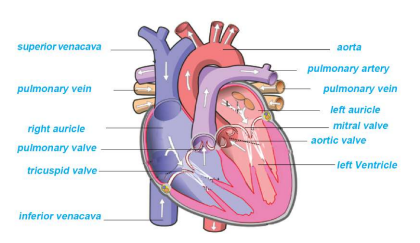
Internal structure of heart
Internal structure of heart
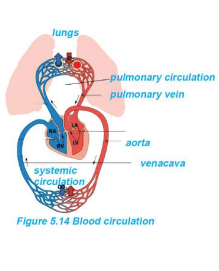
Blood Circulation
Blood Circulation
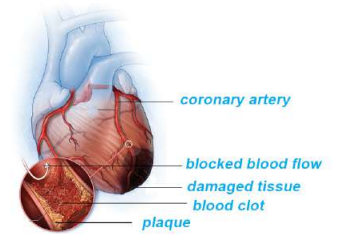
Condition Of HEART ATTACK
Condition Of HEART ATTACK
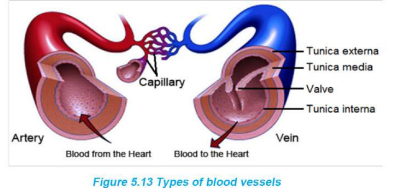
Types of Blood Vessels
Types of Blood Vessels