Chemicals Used in Daily Life – Notes
1. Introduction
- Many chemicals are used in daily life.
- Some are natural and some are manufactured in industries.
- Examples: salt, sugar, soap, detergents, pesticides, fertilizers, preservatives, etc.
- Industrial Chemistry: The branch of chemistry that deals with manufacturing useful materials through chemical processes.
2. Food Preservatives
➤ Definition:
Substances used to prevent food from decaying by stopping the growth of bacteria, yeast, and mold.
➤ Why food decays?
Due to microorganisms like bacteria, yeast, and fungi.
Types of Food Preservatives
1️⃣ First Class Preservatives (Natural)
- Obtained from natural sources.
- Can be used in required amounts.
- Examples:
- Salt
- Sugar
- Honey
- Vinegar
- Oil
- Spices
2️⃣ Second Class Preservatives (Chemical)
- Chemically prepared.
- Used in limited amounts only.
- Examples:
- Sodium benzoate
- Potassium nitrate
- Sulphur dioxide
- Calcium propionate
- BHA, BHT
⚠ More than one second-class preservative should not be used in food.
Methods of Food Preservation
🔹 Traditional Methods
- Sun drying
- Mixing salt and oil
- Use of turmeric
- Keeping in cold places
- Use of wood ash
🔹 Modern Methods
- Refrigeration
- Freezing
- Pasteurization
- Cold storage
Artificial Ripening Agents
Chemicals used to ripen fruits quickly.
Examples:
- Calcium carbide
- Ethylene gas
- Ethephon
⚠ Harmful effects:
Skin irritation
Eye irritation
Lung problems
Cancer risk
🧼 3. Chemicals Used in Cleansing
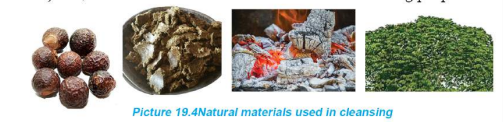
A. Natural Cleansing Materials
| Substance | Use |
|---|---|
| Reetha | Natural shampoo |
| Peena | Hair washing |
| Wood ash | Cleaning utensils |
| Lemon juice | Natural cleaner |
| Sajiban | Soap, biodiesel, fertilizer |
B. Soap
➤ Definition:
Sodium or potassium salts of long-chain fatty acids.
➤ Preparation:
Made by heating oil/fat with sodium hydroxide (NaOH).
This process is called Saponification.
➤ Properties:
Biodegradable
Forms scum in hard water
🧼 Activity: Preparation of Soap (Saponification)
Objective:
To prepare soap in the laboratory.
Materials Required:
- Vegetable oil or animal fat (about 40 ml)
- Sodium hydroxide (NaOH) solution
- Common salt (NaCl)
- Beaker
- Glass rod
- Filter paper
- Funnel
- Heat source
Procedure:
- Take about 40 ml of vegetable oil in a beaker.
- Prepare sodium hydroxide solution by dissolving 15 g NaOH in 50 ml water.
- Mix the oil and NaOH solution and heat the mixture gently while stirring.
- After some time, a thick paste is formed.
- Add a little common salt to separate the soap.
- Filter the mixture. The solid residue is soap.
- Pour it into a mould and allow it to harden for a day.
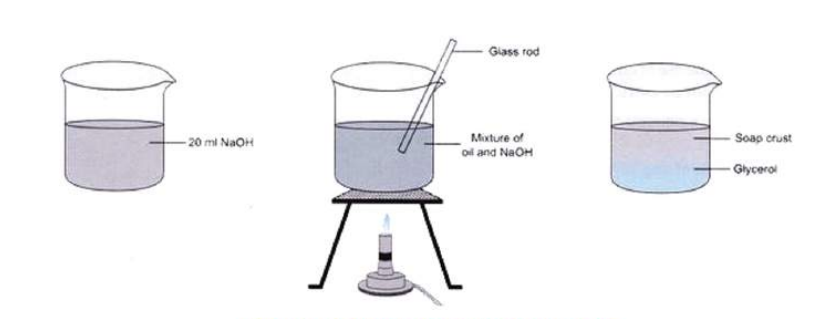
Soap Making Process
Conclusion:
Soap is formed by heating oil or fat with alkali (NaOH).
This process is called saponification.
The liquid left after filtering contains glycerin.
C. Detergent
- Soapless cleaning agent
- Works in hard water
- Non-biodegradable
- Causes water pollution
Examples:
- Sodium lauryl sulphate
- Alkyl benzene sulphonate
🐛 4. Chemical Pesticides
➤ Definition:
Poisonous substances used to kill harmful pests.
Types of Pesticides
1️⃣ On the Basis of Environmental Effect
Biodegradable (Malathion, Dimethoate)
Non-biodegradable (DDT, Aldrin) → Banned
2️⃣ On the Basis of Target Pest
| Type | Used Against |
|---|---|
| Insecticides | Insects |
| Fungicides | Fungi |
| Herbicides | Weeds |
| Rodenticides | Rats |
| Miticides | Mites |
3️⃣ On the Basis of Mode of Action
Contact pesticides
Internal pesticides
Systemic pesticides
Fumigants
⚠ Harmful Effects of Pesticides
- Soil pollution
- Water pollution
- Cancer
- Respiratory diseases
- Death of useful insects
- Ecosystem imbalance
- Thin egg shells in birds
🛑 Banned Pesticides in Nepal
- DDT
- Aldrin
- Dieldrin
- BHC
- Endosulfan
- Chlordane
🛡 Safety Precautions While Using Pesticides
- Use protective mask, gloves, goggles.
- Do not store near food.
- Read labels carefully.
- Do not spray near water sources.
- Wash hands and bathe after spraying.
- Do not consume crops immediately after spraying.
- Follow Integrated Pest Management (IPM).
🌍 5. Chemical Pollution
➤ Definition:
Pollution caused by harmful chemicals in air, water, and soil.
Causes:
- Industrial waste
- Pesticides
- Fertilizers
- Soap and detergents
- Plastic waste
Effects:
Air pollution → Respiratory diseases
Water pollution → Waterborne diseases
Soil pollution → Reduced fertility
Global warming (CO₂ increase)
Ecosystem imbalance
✅ Control Measures
- Use organic fertilizers.
- Proper waste disposal.
- Avoid banned pesticides.
- Treat industrial waste before disposal.
- Reduce chemical use.
- Promote biodegradable products.